
Green innovation will only be effective if it is inclusive. The study identifies that impact businesses focused on climate justice are emerging as innovative solutions to social, climate and environmental challenges.
Businesses with a socio-environmental impact combine financial return and positive impact as a priority, measuring results and having goals to achieve these objectives.
- Have the intention of solving a social or environmental problem
- Operate according to market logic and seek financial returns
- Commit to monitoring the impact generated
- Positive impact is the core business activity
The Laboratory
The study is a collective construction of the Climate Justice Innovation Lab, a collaborative space for social innovator leaders to share experiences, build knowledge and promote collective action to advance the CLIMATE JUSTICE agenda in the Americas.
The Concept
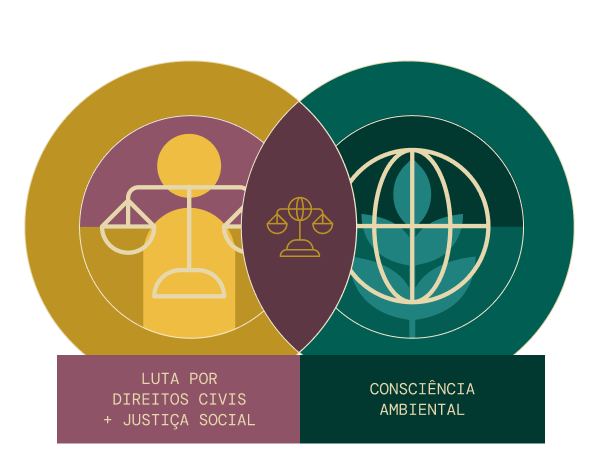
“ CLIMATE JUSTICE is the term that expresses the urgent need for a fair and inclusive economic transition that recognizes and addresses historical and systemic social inequalities. This transition must ensure that the populations that contribute least to carbon emissions but are most severely affected by climate change have effective and equitable participation in adaptation and mitigation processes. Furthermore, it is crucial to ensure that these vulnerable populations have access to basic rights, such as water, sanitation, clean energy, decent work and land rights, ensuring that the positive impact of climate solutions is broad and reflects genuine and collective social responsibility.”
– Climate Justice Innovation Lab
Climate Justice and Impact Businesses
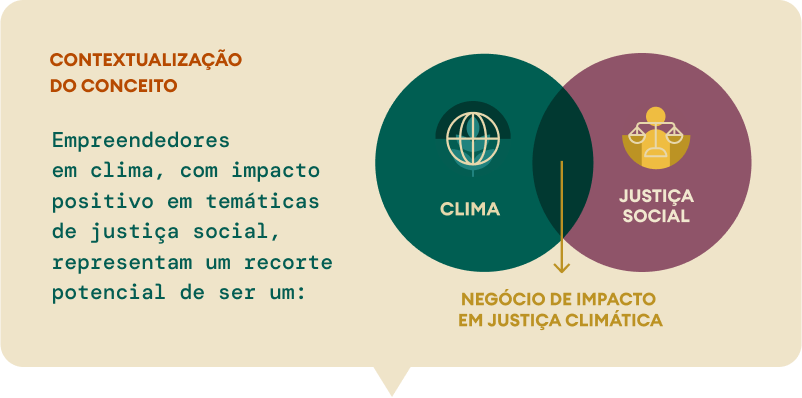
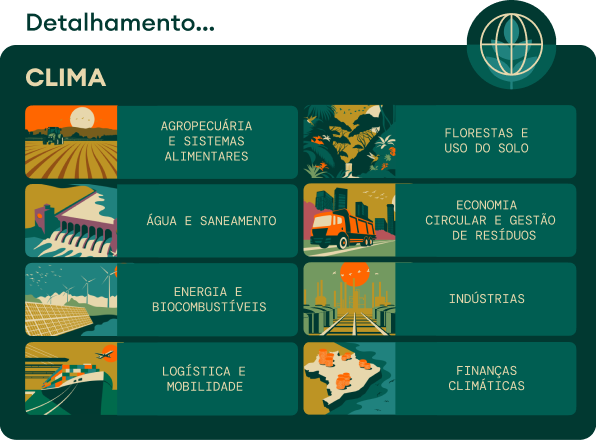
To be considered climate justice impact businesses, we developed the following methodology:
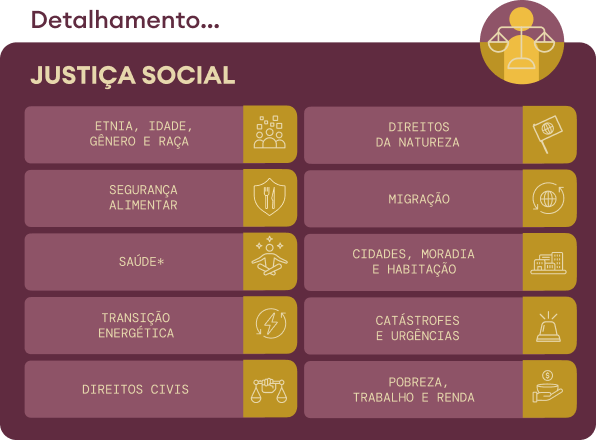
Discover the business cases
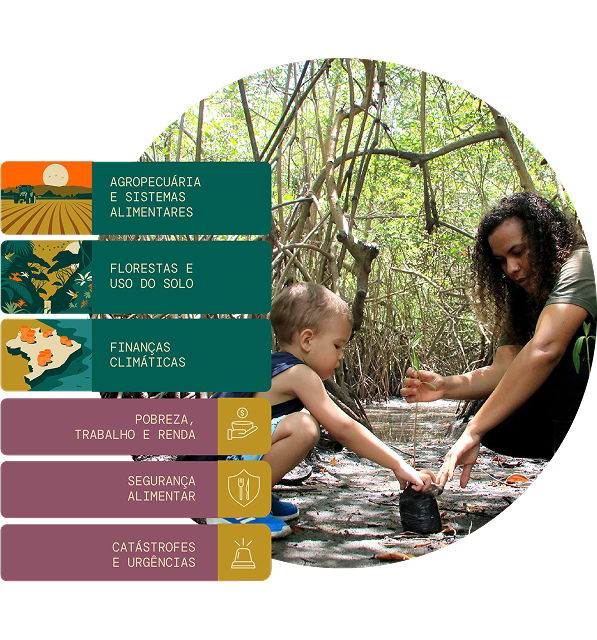
OUR MANGROVE
Potential of mangroves for carbon offsetting and income for vulnerable populations
Mayris Nascimento, CEO and founder of Nosso Mangue, points out that there is a lot of potential on the Brazilian coast to offset carbon, promote regenerative tourism and guarantee sustenance and
quality of life for riverside populations.
Solution
Nosso Mangue works to restore, preserve and conserve mangrove areas. Its main activities include regenerative tourism, education, volunteer engagement, seedling planting, as well as the recovery or conservation of mangroves, ensuring carbon offsets for governments and
companies. The solutions also involve the formation of local communities, “mangrove protectors”, in the medium term, to qualify the production chain and generate income through the preservation of the mangroves.

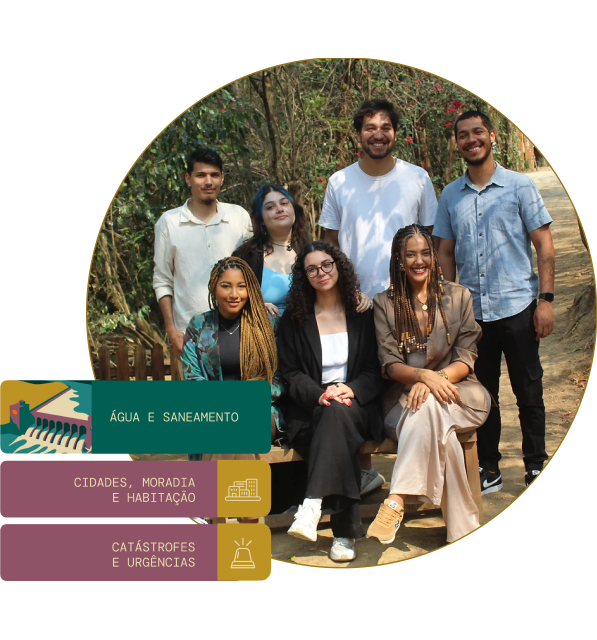
COOP VISION
Artificial intelligence at the service of communities
Artist Fabrícia Sterce and scientist Lennon Medeiros founded Visão Coop, a collective intelligence laboratory dedicated to catalyzing climate resilience in communities.
Solution
Focused on connecting communities and local knowledge with the scientific method, Visão Coop is a laboratory that uses social, digital and green technology to overcome social and environmental challenges. In line with the concept of “sponge cities”, entrepreneurs and regeneration agents work to create more areas with the capacity to absorb water and deal with external heat threats. The solution integrates residents of vulnerable regions – who have knowledge about the needs and potential of the territory – with scientists capable of formulating responses to the challenges. The difference is the use of artificial intelligence, which systematizes “Vulnerability Maps” and indicates these pains and threats in real time. The business drives the implementation of solutions built on the knowledge of the territory’s stakeholders and scientists. The platform mobilizes the climate agenda and connects the different decision-making processes in a customized manner for each territory. The proposed solutions are funded by different arrangements: they can be the government or impact investors.
“What will be the future of humanity if financial capital is not directed towards businesses that promote CLIMATE and social JUSTICE? The Fama Gaia Sociobioeconomy Fund was born out of an existential need. We have no time to waste. We cannot normalize capital financing human and environmental exploitation.”

Pockets that look at the theme
The Climate Justice Innovation Lab has classified 103 organizations as CLIMATE JUSTICE funders in the Americas, but only 12 cite “climate justice” in their investment thesis/theory of change. To better understand how these organizations are allocating capital to CLIMATE JUSTICE, see the different organizations identified in the study according to the table below:

Philanthropy
Expected financial return: None.
Main Focus: Social/environmental impact.
Structure: Donation.
Risk: Low.

Impact investing
Expected financial return: Yes (variable).
Main Focus: Creating shared value (financial and impact).
Structure: Varied (equity,
debt, hybrid).
Risk: Generally higher.

Debt
Expected financial return: Yes (determined).
Main Focus: Generating impact with
capital preservation.
Structure: Loan with repayment obligation.
Risk: Generally minor.

Crowdfunding
Crowdfunding
Expected financial return: Variable (may include non-financial rewards).
Main Focus: Democratizing access to impact investments.
Structure: Online crowdfunding platform.
Risk: Medium/low.

Facilitators
Expected financial return: Indirect (may include some type of financial disbursement).
Main Focus: Capital catalysis and strengthening the impact ecosystem.
Structure: Non-financial support (mentoring, networking, etc.)
Risk: Low.

Development mechanisms
Expected financial return: Indirect.
Main Focus: Creation/development of an impact ecosystem through government or development institutions.
Structure: Policies, programs, incentives.
Risk: Low.
“For a systemic change that promotes quality of human life for all, climate innovation is necessary through current business models…
Developing an ecosystem that uses climate justice as a guiding principle for this climate innovation can not only be one of the strategies to alleviate the climate crisis but also bring dignity to human life, reducing the impact of climate change on those who suffer the most from its consequences but who have contributed the least to the carbon emissions that brought us here.”

 Join the Green Transformation
INNOVATIONS IN CLIMATE JUSTICE: OPPORTUNITIES FOR DEVELOPING BUSINESSES WITH POSITIVE IMPACT
An analysis of innovative businesses offering solutions for climate justice, funders of the agenda in the Americas, and recommendations for advancing it.
Team

Daniel Contrucci
Richard Gravina
Out Lottfi
Bethany Lins
Eduardo Avila
Fernando Silva
Lennon Medeiros
Mayris Nascimento
Valmir Ortega
Amanda Magalhães
Jacqueline Nichi
Mariana Fonseca
Rafael Oliveira
Cameren Bullins
Fabio Alperowitch
Guilherme Zaniolo Karam
John Pacific
Laura Vehanen
Liz Lacerda
Marcel Fukuyama
Marcela Angel
BMW Foundation Herbert
Quandt
Global Impact Investing
Network (GIIN)
B Lab US & Canada
MIT Environmental Solutions
Initiative
Detroit Future City
Youth Climate Lab
Caboca Collective/Confluence of Favelas
The Sitawi
Run
Coop Vision
LACLIMA
Decoding Institute
Amanda Magalhães
Jacqueline Nichi
Peter Correia
Rodolfo Hing
Pipe.Social
Brazilian Center for Climate Justice
Climate Ventures & Pipe.Social
Tania Lins
Luiz Theodore
Sarah Siqueira
Tauana Costa
Thais Erre Felix
Daniel Contrucci
Richard Gravina
Out Lottfi
Our Partners
We work in collaboration with organizations and institutions committed to the climate agenda and sustainable development, including:
These partners play a crucial role in the development and implementation of the solutions and analytics presented by OV Insights.